

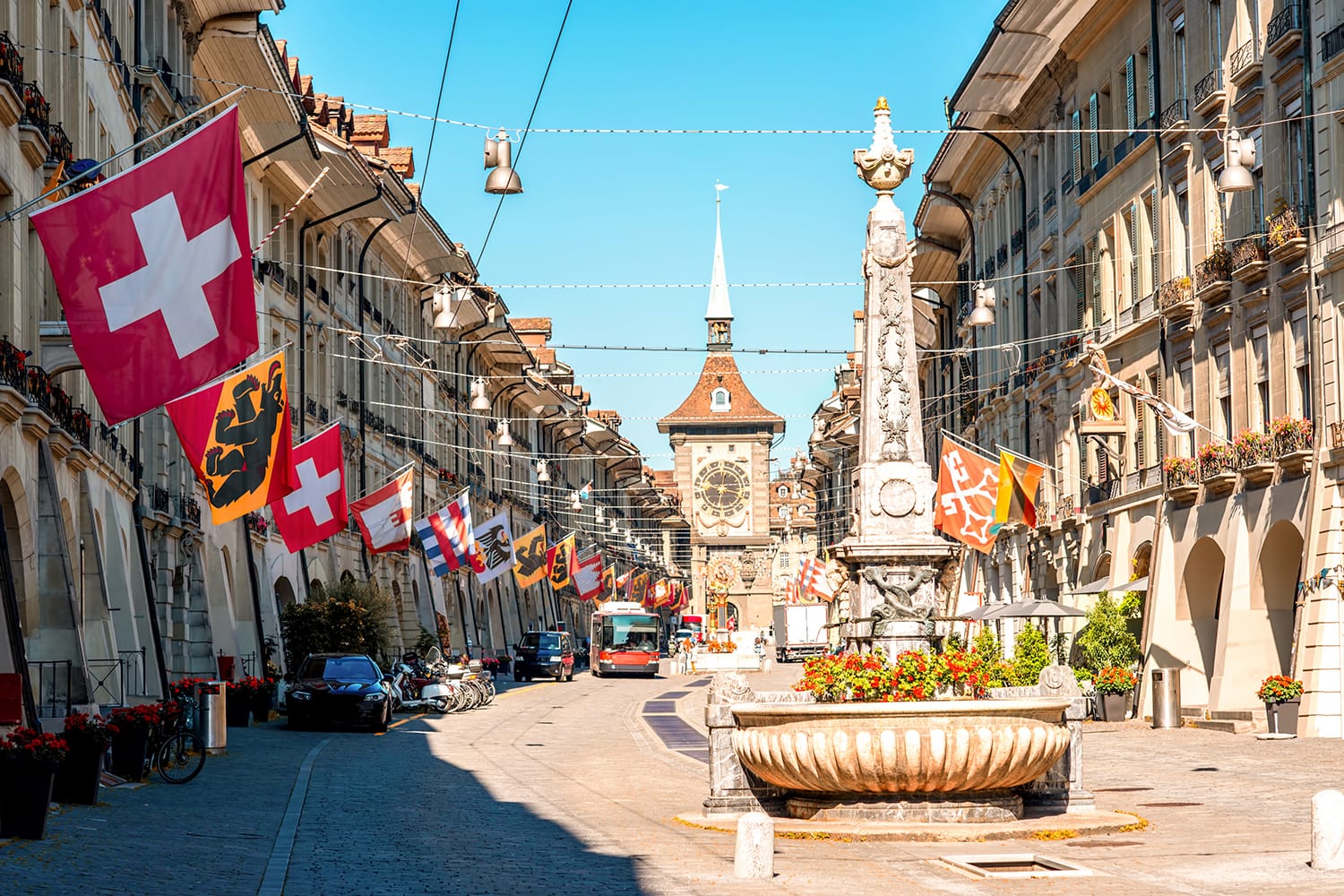
Quick answer
The classic Bern walking tour route covers approximately 3.2 kilometers through the UNESCO-listed Old Town, starting at Bern Hauptbahnhof and looping past Zytglogge clock tower, the cathedral, Bundesplatz, and the Aare overlooks before returning via the lower arcades. The entire route is free to walk and open year-round, with optimal viewing light between 09:00 and 17:00 when fountain sculptures and sandstone facades are best illuminated without midday glare or evening shadow.
Bern's medieval street grid was laid out after a fire destroyed the original wooden settlement in 1405, and the resulting sandstone city has remained functionally intact for six centuries. The main east-west axis runs unbroken from the railway station to the Nydeggkirche, punctuated by eleven public fountains installed between 1542 and 1549. Most visitors cover the core bern walking tour route in two to three hours, though the arcades and side alleys reward slower exploration. The covered walkways that line nearly every street in the Altstadt were added in the 15th century to shelter market stalls and protect goods from rain. These arcades remain the defining feature of the walking experience, creating continuous shade in summer and dry passage in winter. Shops, cafés, and cellars occupy the ground floors behind Gothic and Baroque facades, many with painted coats of arms or guild symbols still visible above doorways. Zytglogge, the astronomical clock tower at the city's first western gate, marks the midpoint of most routes. The clock mechanism dates to 1530 and performs its full sequence four minutes before each hour. The Münster cathedral rises 100 meters at the peninsula's southern edge, its spire the tallest in Switzerland and visible from most points along the route. Public access to the nave is free, though tower climbs require a separate ticket. The Aare River loops around three sides of the Old Town, creating natural overlooks at Münsterplattform and Rosengarten. These terraces offer unobstructed views of the red-tile rooftops and the Alps beyond, particularly sharp in autumn and spring when atmospheric haze is minimal. The lower Matte district, accessible by steep lanes or the Marzilibahn funicular, sits at river level and connects to swimming platforms used by locals year-round. Walking the bern walking tour route during weekday mornings avoids the midday tour groups that gather near Zytglogge and Bundesplatz, leaving the arcades and fountain squares notably quieter for photography and unhurried observation.
“The arcades and fountain squares create continuous shade in summer and dry passage in winter, a rhythm unchanged since the 15th century.”
Recommended Bern Walking Tour Route: A Timed Plan
This route suits first-time visitors seeking a compact introduction to Bern's Old Town architecture and fountain heritage. Allow 2–3 hours at a relaxed pace, longer if you pause for cafés or museum stops.
Bern Hauptbahnhof to Spitalgasse
Exit the station and walk west along Spitalgasse, the main shopping artery lined with 15th-century arcades. The covered walkways stretch for 6 kilometers across the Old Town—plan to walk beneath them most of the route.
Zytglogge Clock Tower
Pause at the medieval clock tower to see the astronomical dial and moving figures (performances occur four minutes before each hour). The tower marks the western gate of the original 12th-century city walls.
Kramgasse and Einstein House
Continue along Kramgasse, passing the Anna Seiler, Simson, and Samson fountains—eleven Renaissance fountains punctuate the route. Einstein's former apartment at Kramgasse 49 is visible from the street (museum entry separate).
Bern Cathedral (Münster)
Walk south to the cathedral, Switzerland's tallest church spire at 100 meters. The western portal's Last Judgment relief contains 234 painted figures; entry to the nave is free, tower climb costs extra.
Nydeggbrücke and Bear Park
Cross the Nydegg Bridge for views of the Aare loop encircling the peninsula, then descend to the Bear Park on the river's east bank. The outdoor enclosure is free; bears are most active in morning and late afternoon.
Climb to Rosengarten
Ascend the footpath or take the public elevator from the bear pit to the Rose Garden terrace. The park offers a panoramic view across the Old Town's red rooftops and the Aare meander, with 220 rose varieties in bloom May through October.
Optimal Timing for Your Bern Walking Tour Route
The best arrival window is 09:00–17:00, which provides optimal daylight for viewing architecture and fountain details while avoiding peak midday crowds. Planning your tour during these hours ensures a steady pace through the Old Town.
Spring (April–May)
Moderate crowdsMild, 10°C to 18°C. Flowers bloom along the route.
Summer (June–August)
Peak tourist densityWarm, 20°C to 25°C. Long days offer extended exploration hours.
Autumn (September–October)
Lower volumeCool, 8°C to 16°C. Clear conditions favor viewing building facades.
Winter (November–March)
Minimal foot trafficCold, 0°C to 7°C. Markets may influence local crowd density.
Verdict: Tuesday to Thursday, arriving at 09:00, during the months of April or October.
Getting to the Start of the Bern Walking Tour Route
The Bern walking tour route begins in the Old Town, which is centrally located and easily accessible via Bern's efficient public transportation network. The most direct approach is to arrive at the Bern railway station (Bern Bahnhof).
S-Bahn or InterCity trains to Bern Bahnhof
Lines 10, 11, 12, 19, 20, 30 to Bern Bahnhof
Lines 3, 6, 7, 8, 9 to Bern Bahnhof
Walk from Bern Bahnhof to Old Town
Key Landmarks Along the Bern Walking Tour Route
The Bern walking tour route encompasses several architectural landmarks that define the city's UNESCO-listed Old Town. These sites provide a comprehensive overview of the capital's medieval layout and political significance.
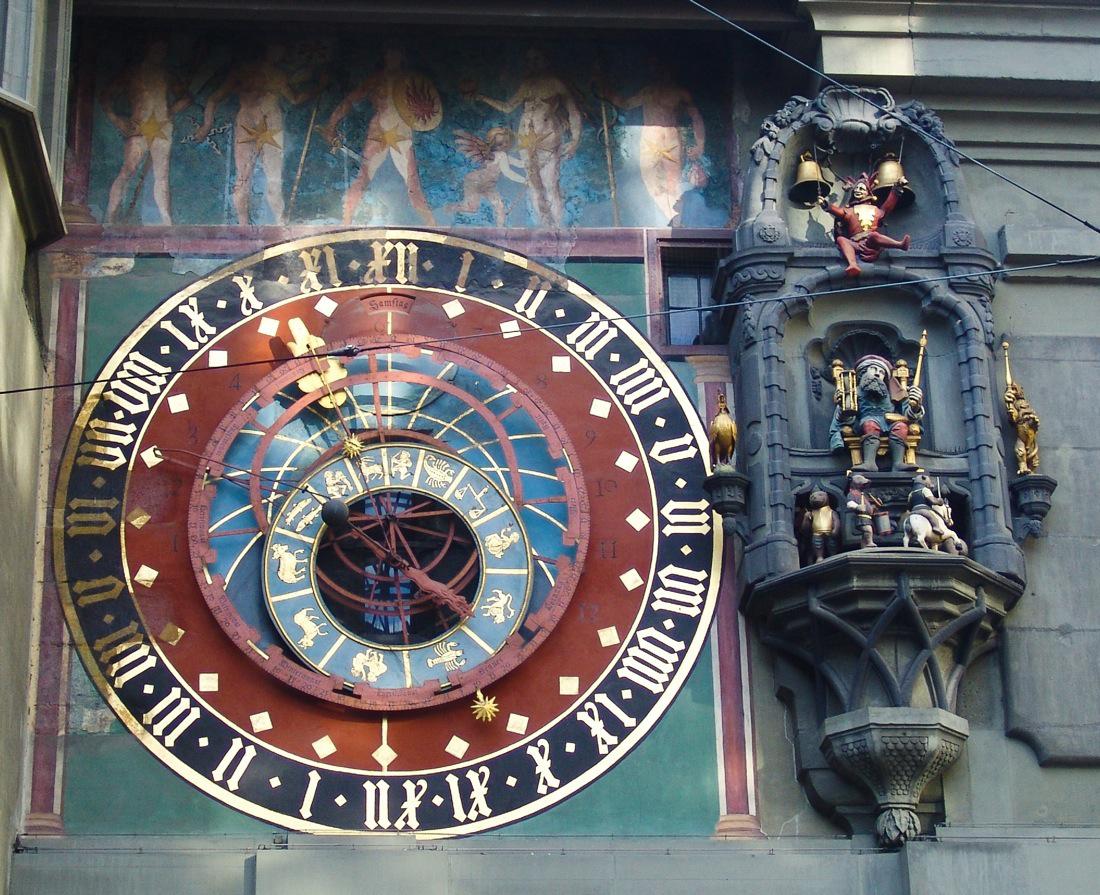
Zytglogge
This medieval clock tower features an astronomical clock and moving figures that perform before the hour strikes. It served as a guard tower, prison, and clock tower throughout its history.
Watch the clock mechanism move four minutes before the hour.
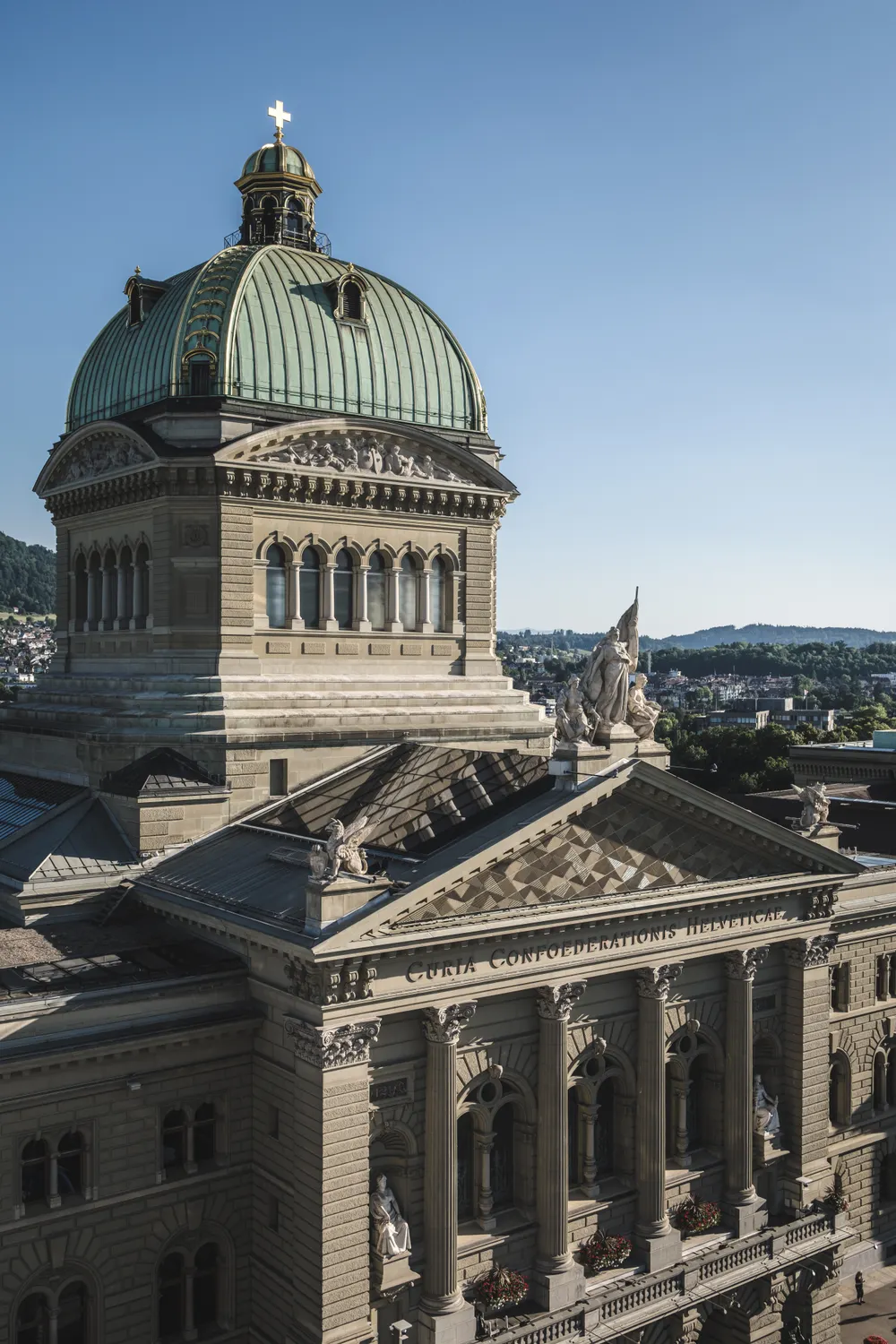
Federal Palace
The seat of the Swiss government houses the Federal Assembly and the Federal Council. Its central dome and interior architecture reflect the political structure of the nation.
View the facade from Parliament Square for architectural symmetry.
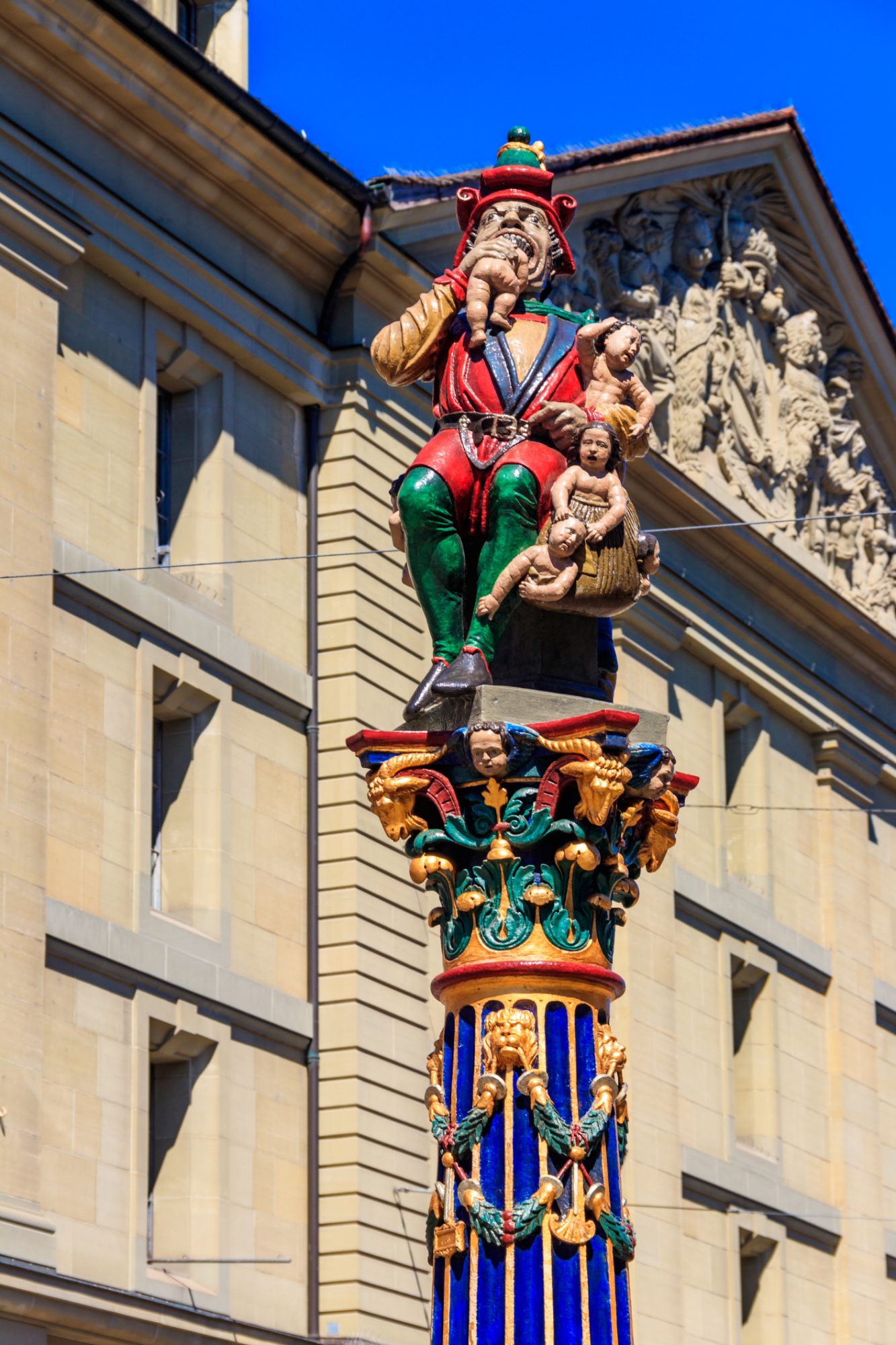
Kindlifresserbrunnen
This 16th-century fountain depicts a figure consuming small children, a common motif in Swiss folklore of the era. It stands as one of the many ornate fountains distributed along the main streets.
Look closely at the statue's colorful, detailed robes.
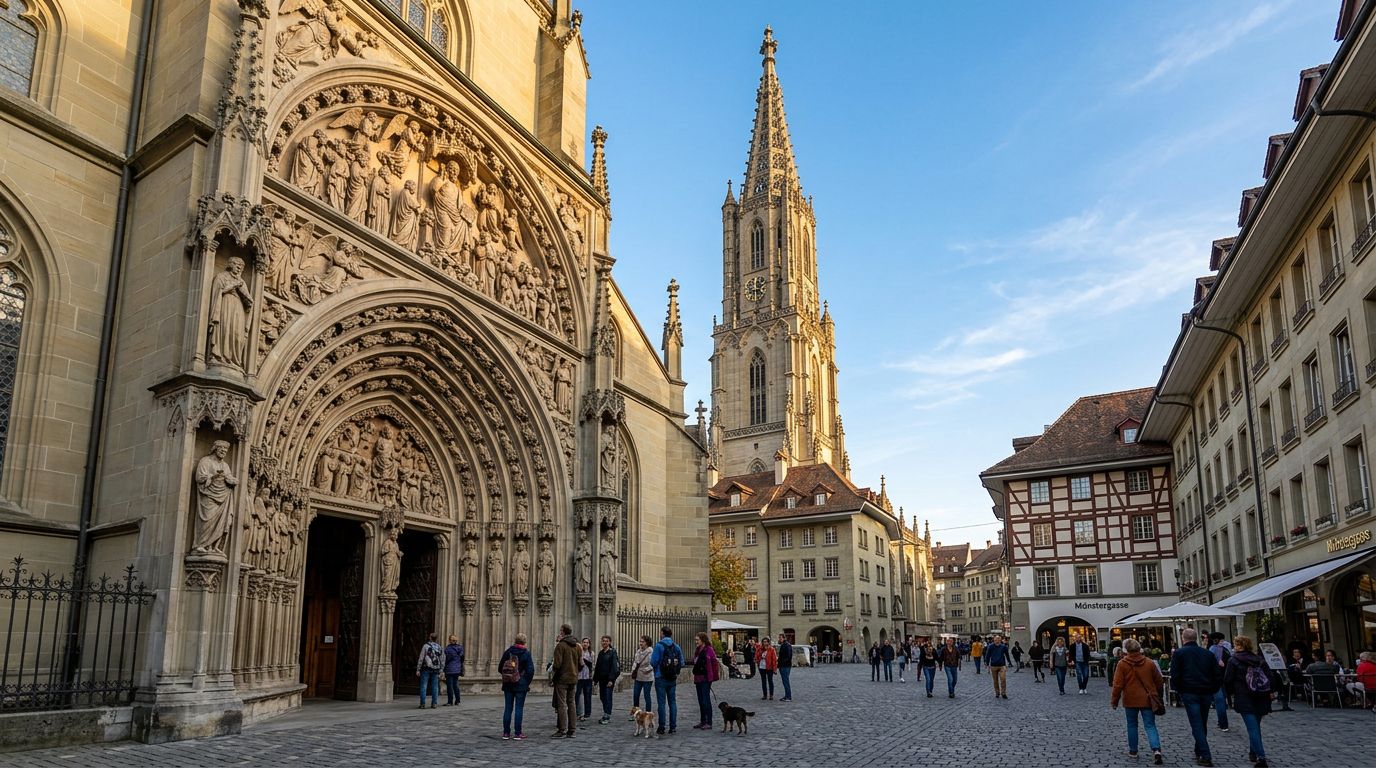
Bern Minster
As the tallest cathedral in Switzerland, this Gothic structure is known for its intricate portal depicting the Last Judgment. The spire dominates the skyline of the Old Town.
Walk to the terrace behind the church for river views.
Accessibility Considerations for the Bern Walking Tour Route
The historic Old Town of Bern presents challenges for accessibility due to its traditional cobblestone surfaces and varied topography. While public streets are open, travelers with mobility aids should plan routes carefully to navigate the medieval layout.
The UNESCO-listed Old Town features uneven cobblestones and steep gradients in certain areas.
Main thoroughfares are generally navigable, though some side streets and historic buildings have limited access.
Public accessible facilities are located at key points throughout the Old Town.
Information regarding accessible tours and sensory support can be coordinated via the official site at https://www.bern.com.
Check availability
Frequently asked questions about the Bern walking tour route
Everything you need to know about bern walking tour route